- Nov 24, 2025
- —
- 07 mins read
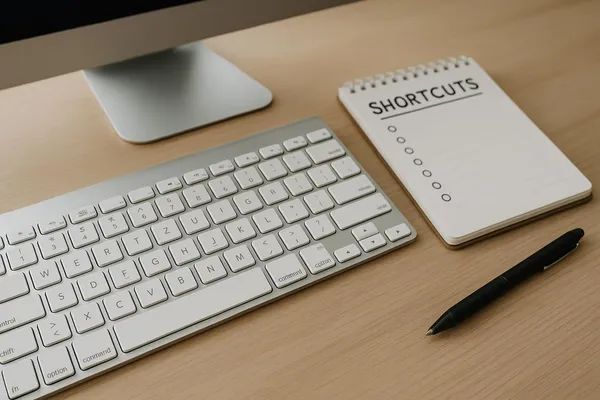
Keyboard Shortcut Bootcamp: Learn 20 Hotkeys in 20 Minutes
A quick guide to learn 20 time-saving keyboard shortcuts across macOS/Windows, Gmail, Google Docs, and browsers in 20 minutes to boost daily productivity.



































































































Explorer posts by categories
Explorer posts by tags
 by Max Bennett
Let’s set the scene: You’re knee-deep in a spreadsheet that feels like it was designed by a sadist. Your eyes are burning, your brain is pulsing like it’s trying to send an SOS message, and you’re starting to wonder if you’ll ever feel joy again. Instead of powering through (which let’s be real, is just code for spending the next hour pretending to work while secretly scrolling cat memes), what if the best thing you could do… was nothing?
Yep. I’m talking about productive breaks. Specifically, that ancient-but-underrated art of staring out the window like you’re in a moody indie film. Surprise: science says this dreamy, aimless zone-out time might actually be one of your brain’s favorite things.
Let’s break it down without breaking down ourselves.

We live in a productivity-obsessed culture where the more exhausted you sound, the more important you must be. If you say things like, “I had back-to-back meetings from 8 to 6 and I haven’t peed since Tuesday,” you’re basically a performance idol.
But here’s the plot twist: all that “grind” is destroying your actual ability to work well.
Taking breaks isn’t lazy—it’s essential. Studies from the University of Illinois have shown that brief diversions from a task can dramatically improve focus and performance. Think of your attention span like a rubber band. Keep pulling it too long without a break, and… snap.
Did you know your brain uses glucose the same way your muscles do during a workout? Focusing really is mental weightlifting.
So if you’ve ever felt like you’re dragging your brain through mental mud, it’s not you—it’s your lack of breaks.
Doing nothing isn’t just relaxing; it activates the Default Mode Network (DMN), a super intriguing brain network that kicks in when we’re at rest but not asleep.
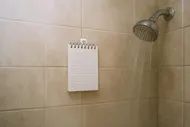
The DMN is responsible for creative incubation, problem-solving, long-term planning, and even processing your sense of self. Basically, it’s the area that gets lit when you zone out in the shower and suddenly remember that one weird thing you did in third grade and solve six problems without even trying.

That’s not a bug in your brain—it’s a feature.
So if you think spacing out is a waste of time… congrats, you just missed your brain’s most advanced creative tool yelling, “I got this.”
Now, before you rush to justify a three-hour TikTok scroll by saying “Max said breaks are productive!”, hold up. There’s a difference between restorative breaks and distraction-reward loops.
Let’s break it into categories:
Oh, and here’s a helpful piece if your scroll finger is too powerful: Stop Doomscrolling: Hacks to Reclaim Your Time from Social Media Black Holes.
This is the simplest, weirdest, and maybe most profound tool in your productivity toolkit: pick a window, look out, and just let your mind wander.
No agenda. No podcast. No to-do list. Just scenery and silence.
It’s mindfulness without feeling like you’re failing at meditation (because odds are, someone just thought: “breathe in—am I doing this wrong?”).
Stare out a window for five full uninterrupted minutes. No phone, no music, no thinking about thinking. Just look. Then come back to your work and notice the shift.
Need more than a window? Try nature.
Nature walks have been linked to increased brain connectivity (yes please), reduced stress hormones (also yes), and enhanced working memory. Something about hearing birds and touching leaves makes our cortisol levels go, “Chill, buddy.”
If you’re lucky enough to be near a green space—or let’s be honest, even a mediocre park strip with some determined weeds—go to it.

Because sometimes, you need a break that actually helps, not just a caffeine withdrawal delay.
Spend five minutes cleaning up your desk. It’s like a mini-refresh button. Bonus: you don’t have to deal with the full Desk Detox unless you want to level up.
Do something nice for someone else—send a thank-you message or refill the communal coffee pot. It boosts morale and breaks your thought loop. For more on this approach, see The Power of the Five-Minute Favor.
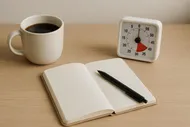
Set a timer, stretch everything that creaks, and drink a glass of water. Wave quietly at your dehydrated soul while you’re at it.
Pop on one of those 2-hour Lo-Fi chill beats on YouTube. Let your brain surf the waves of “slightly bored but not distracted”.
That one’s my go-to vibe when I need something soft but not sleep-inducing.
There’s no one-size-fits-all recipe—but your brain and body appreciate rhythm. Here are a few popular approaches:
Experiment and see what works for YOUR rhythm. I’m a fan of starting with a Power Hour (yep, I wrote about it: Mastering the Power Hour for Ultimate Productivity) and sneaking in structured breaks from there.

The truth is, many of us feel weird letting ourselves take breaks. Like every pause needs to be “earned.” But guess what?
Your brain isn’t a machine. It’s a spongey, creative, curious mess of genius that actually works BETTER when it’s allowed to… well, not work sometimes.
So next time you’re stuck in the productivity mud, let your precious mind take a stroll—out the window, down the hall, or into a perfect pod of music and silence.
For the next 5 days, take 2 intentional 5-10 minute breaks a day. No screens. No scrolling. Track how you feel. Energy better? Mood improved? Let me know over on Instagram.
Taking a break doesn’t mean falling behind. It means you’re working with your brain, not shoving it face-first into a keyboard.
So… when was the last time you just stared out the window?
Maybe now’s a good time.

Max Bennett
Max was once the king of procrastination, proudly sporting a "Deadline Enthusiast" badge. After realizing he spent more time organizing his desk than actually working, he dove headfirst into the world of productivity. Max now experiments with unconventional (and sometimes ridiculous) productivity hacks and shares what works—with plenty of laughs along the way.
A quick guide to learn 20 time-saving keyboard shortcuts across macOS/Windows, Gmail, Google Docs, and browsers in 20 minutes to boost daily productivity.
A practical, no-shame guide to a one-week time audit that reveals hidden time leaks, helping you reclaim 5–10 hours next week with simple logging methods, templates, and quick fixes.
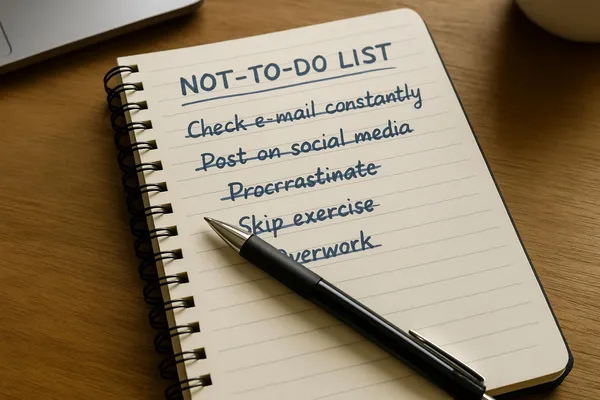
A concise guide to creating a Not-To-Do List that reduces decision fatigue, protects context, and frees up mental bandwidth for meaningful work—with practical steps and examples.